Understanding Data Protection Laws and Private Messaging Compliance

Sarah Mitchell
27 March 2026
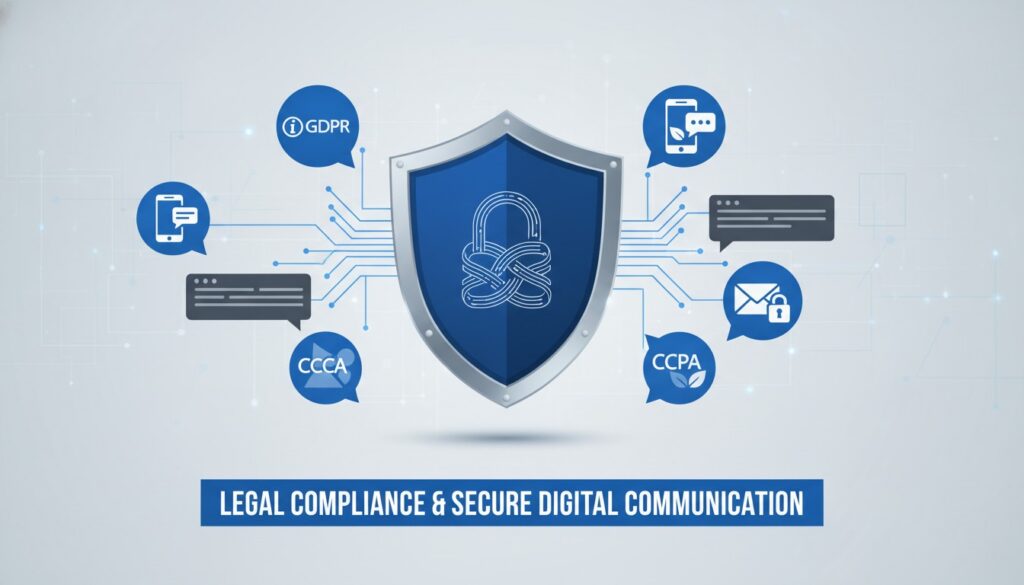
Understanding Data Protection Laws and Private Messaging Compliance
Introduction
In today’s interconnected digital landscape, private messaging has become the backbone of modern communication. From instant messaging platforms to encrypted business communications, organizations worldwide rely on digital messaging to conduct operations, serve customers, and facilitate internal collaboration. However, with this digital transformation comes a complex web of data protection regulations that organizations must navigate carefully.
The stakes have never been higher. With regulations like the General Data Protection Regulation (GDPR), California Consumer Privacy Act (CCPA), and numerous other international privacy laws, non-compliance can result in devastating financial penalties, legal consequences, and irreparable damage to brand reputation. Understanding these regulations and implementing compliant messaging practices isn’t just a legal necessity—it’s a business imperative.
This comprehensive guide will walk you through the essential aspects of data protection laws affecting private messaging, provide practical compliance strategies, and help you build a robust framework for protecting user data while maintaining effective digital communications.
Understanding Key Data Protection Regulations
The General Data Protection Regulation (GDPR)
The GDPR, implemented in 2018, remains one of the most comprehensive and influential data protection frameworks globally. This regulation applies to any organization processing personal data of EU residents, regardless of where the organization is based.
Key GDPR principles affecting messaging compliance:
- Lawful basis for processing: Organizations must have a legitimate legal basis for collecting and processing personal data through messaging platforms
- Data minimization: Only collect and process data that is necessary for specific, legitimate purposes
- Purpose limitation: Personal data must be used only for the purposes for which it was originally collected
- Storage limitation: Data should not be kept longer than necessary
- Accountability: Organizations must demonstrate compliance with GDPR principles
- Right to know: Users can request information about personal data collection, use, and sharing
- Right to delete: Users can request deletion of their personal information
- Right to opt-out: Users can opt-out of the sale of their personal information
- Non-discrimination: Organizations cannot discriminate against users who exercise their privacy rights
- Message content encryption: Balancing user privacy with legal obligations for data access
- Cross-border data transfers: Ensuring adequate protection when data crosses international boundaries
- Third-party integrations: Managing compliance when messaging platforms integrate with other services
- User consent management: Obtaining and maintaining valid consent for data processing activities
- Identity verification: Ensuring requests come from legitimate data subjects
- Data portability: Providing user data in a structured, machine-readable format
- Right to rectification: Allowing users to correct inaccurate personal data
- Right to erasure: Implementing “right to be forgotten” while maintaining system integrity
- End-to-end encryption: Protecting message content from unauthorized access
- Minimal data collection: Collecting only data necessary for service functionality
- Transparent privacy policies: Clear communication about data practices
- User control mechanisms: Giving users meaningful choices about their data
- Regular security audits: Ongoing assessment of security measures and vulnerabilities
- Implement AES-256 encryption for data at rest
- Use TLS 1.3 or higher for data in transit
- Deploy perfect forward secrecy to protect past communications
- Regular penetration testing and security assessments
- Establish clear data retention policies aligned with legal requirements
- Implement automated data deletion processes
- Create audit trails for all data processing activities
- Develop incident response procedures for data breaches
- Obtain explicit, informed consent for data processing activities
- Provide granular consent options allowing users to choose specific data uses
- Implement consent withdrawal mechanisms that are as easy as giving consent
- Maintain records of consent including when, how, and what users consented to
- Adequacy decisions: Transfers to countries deemed to have adequate protection
- Standard Contractual Clauses (SCCs): Contractual safeguards for international transfers
- Binding Corporate Rules (BCRs): Internal policies for multinational organizations
- Certification schemes: Industry-specific certification programs
- Data localization requirements: Some countries require certain data to be stored locally
- Government access provisions: Varying requirements for law enforcement access to communications
- Industry-specific regulations: Additional requirements for healthcare, finance, or other regulated industries
- Quarterly privacy impact assessments
- Annual third-party security audits
- Continuous monitoring of data processing activities
- Regular policy updates to reflect changing regulations
- Regular privacy training for all staff members
- Specialized training for technical and customer service teams
- Clear escalation procedures for privacy-related incidents
- Regular updates on regulatory changes and their implications
- Records of processing activities (ROPA)
- Privacy impact assessments for high-risk processing
- Data breach incident logs and response actions
- User consent records and withdrawal requests
- Vendor due diligence documentation
- Algorithmic transparency requirements
- Automated decision-making safeguards
- Bias prevention and fairness considerations
- Explainability requirements for AI-driven features
- Monitor developments in quantum-resistant cryptography
- Plan for cryptographic agility in system design
- Consider long-term data protection implications
“Under GDPR, organizations can face fines of up to 4% of annual global turnover or €20 million, whichever is higher, for serious violations.”
California Consumer Privacy Act (CCPA) and CPRA
The CCPA, enhanced by the California Privacy Rights Act (CPRA), grants California residents specific rights regarding their personal information. These regulations significantly impact how organizations handle messaging data for California users.
CCPA compliance requirements for messaging platforms:
Other International Regulations
Brazil’s Lei Geral de Proteção de Dados (LGPD), Canada’s Personal Information Protection and Electronic Documents Act (PIPEDA), and Australia’s Privacy Act all impose similar requirements for data protection in digital communications.
Private Messaging Compliance Challenges
Data Collection and Storage
Private messaging platforms face unique challenges in balancing functionality with compliance. Metadata collection, including timestamps, IP addresses, and device information, often occurs automatically but requires careful consideration under data protection laws.
Common compliance challenges include:
Data Subject Rights Implementation
Implementing data subject rights in messaging environments presents technical and operational challenges:
Building a Compliant Messaging Framework
Privacy by Design Principles
Implementing Privacy by Design ensures that data protection is built into your messaging systems from the ground up, rather than added as an afterthought.
Core Privacy by Design elements for messaging platforms:
Technical Implementation Strategies
Encryption and Security Measures:
Consent Management and User Rights
Effective consent management is crucial for compliance. Organizations must:
“Consent must be freely given, specific, informed, and unambiguous. Pre-ticked boxes or inactivity do not constitute valid consent under GDPR.”
International Compliance Considerations
Cross-Border Data Transfers
When messaging platforms operate internationally, cross-border data transfers become a critical compliance consideration. Organizations must ensure adequate protection for personal data transferred outside the originating jurisdiction.
Key transfer mechanisms:
Regional Variations and Requirements
Different jurisdictions may have specific requirements that affect messaging compliance:
Best Practices for Ongoing Compliance
Regular Compliance Audits
Establish a comprehensive audit program that includes:
Staff Training and Awareness
Human error remains one of the biggest compliance risks. Implement:
Documentation and Record Keeping
Maintain comprehensive documentation including:
Emerging Trends and Future Considerations
Artificial Intelligence and Machine Learning
As messaging platforms increasingly incorporate AI and ML technologies, new compliance challenges emerge:
Quantum Computing and Encryption
The potential advent of quantum computing poses long-term challenges to current encryption methods. Organizations should:
Conclusion
Navigating the complex landscape of data protection laws and private messaging compliance requires a comprehensive, proactive approach. Organizations must balance user privacy expectations, regulatory requirements, and business functionality while maintaining robust security measures.
Success in this environment depends on implementing Privacy by Design principles, maintaining ongoing compliance monitoring, and staying informed about evolving regulatory landscapes. The investment in comprehensive compliance frameworks not only protects against legal and financial risks but also builds user trust and competitive advantage in an increasingly privacy-conscious market.
Remember that compliance is not a one-time achievement but an ongoing commitment that requires regular review, updates, and improvements. As regulations continue to evolve and new privacy challenges emerge, organizations must remain agile and responsive to maintain effective compliance.
Call-to-Action
Ready to strengthen your messaging compliance framework? Start by conducting a comprehensive privacy audit of your current messaging practices. Identify gaps in your data protection measures and develop a prioritized action plan for addressing compliance requirements.
Consider partnering with privacy law experts and technical specialists who can help you navigate complex regulatory requirements while maintaining operational efficiency. Don’t wait for a compliance crisis—take proactive steps today to protect your organization and your users’ privacy rights.
For more insights on digital privacy and compliance strategies, subscribe to our newsletter and stay informed about the latest developments in data protection law.