The Complete Guide to Self-Destructing Messages: How They Work

Sarah Mitchell
27 March 2026
The Complete Guide to Self-Destructing Messages: How They Work
Introduction
In an era where digital privacy has become a paramount concern, self-destructing messages have emerged as a powerful tool for protecting sensitive communications. From Snapchat’s pioneering disappearing photos to Signal’s vanishing messages, this technology has revolutionized how we think about temporary digital communication.
But how exactly do these ephemeral messages work? What makes them secure, and are they truly as private as they claim to be? This comprehensive guide will demystify the technology behind self-destructing messages, explore their various implementations, and help you understand when and how to use them effectively.
Understanding Self-Destructing Message Technology
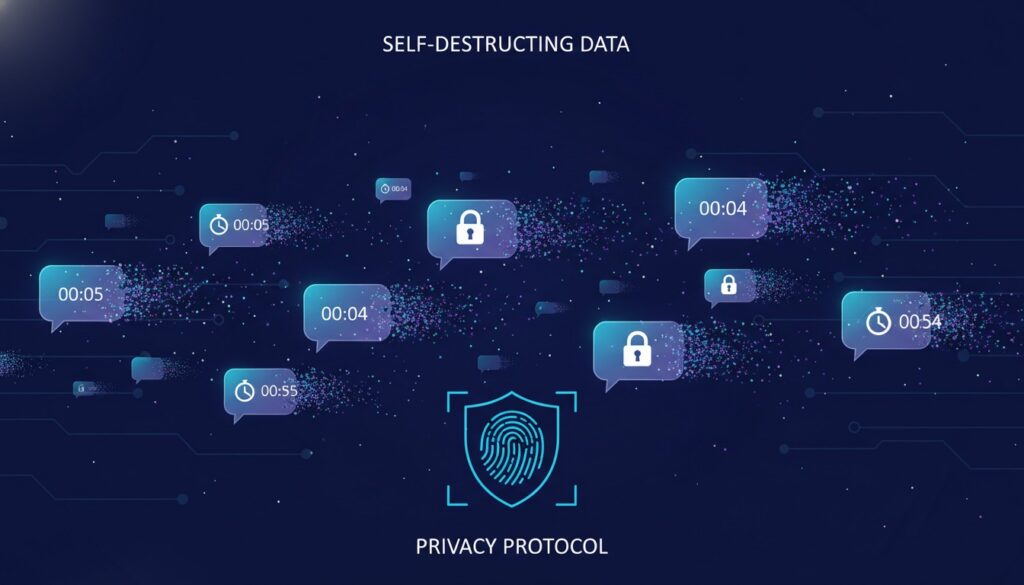
Self-destructing messages, also known as ephemeral messaging or disappearing messages, are communications designed to automatically delete themselves after a predetermined time or after being viewed. This concept isn’t entirely new – it’s inspired by the age-old practice of burning sensitive documents after reading them.
The Core Mechanism
At its fundamental level, self-destructing message technology operates on three key principles:
- Time-based deletion: Messages are programmed to disappear after a specific duration
- View-based deletion: Content vanishes after being opened or viewed
- Server-side enforcement: The messaging platform actively removes data from its servers
- Messages are stored temporarily on Snapchat’s servers
- Once viewed, the content is marked for deletion
- The app attempts to prevent screenshots (though this isn’t foolproof)
- Metadata about the message exchange may still be retained
- End-to-end encryption protects messages in transit
- Users can set custom disappearing timers (5 seconds to 1 week)
- Messages are deleted from both sender and receiver devices
- The platform stores minimal metadata
- Available for individual and group chats
- Fixed 7-day deletion period
- Messages disappear from chat history but may remain in backups
- Quoted replies to disappearing messages may persist
- Screenshots and Screen Recording: Most platforms cannot prevent users from capturing content through device features
- Backup Vulnerabilities: Messages might persist in system backups before deletion
- Forensic Recovery: Deleted data may sometimes be recoverable using specialized tools
- Metadata Retention: While message content disappears, communication metadata often remains
- Sharing sensitive personal information
- Business communications containing confidential data
- Temporary coordination messages that don’t need permanent storage
- Any communication where privacy is a primary concern
- Encryption Standards: Look for end-to-end encryption
- Open Source: Platforms with open-source code allow security auditing
- Jurisdiction: Consider where the company is based and what laws apply
- Track Record: Research the platform’s history of protecting user privacy
- Blockchain-based Solutions: Some platforms are exploring decentralized approaches to temporary messaging
- AI-Powered Content Recognition: Advanced systems that can detect and protect sensitive information automatically
- Biometric Verification: Enhanced security through fingerprint or face recognition before message access
- Legal firms using ephemeral messaging for client communications
- Healthcare providers protecting patient information
- Financial institutions securing transaction details
- Government agencies protecting classified communications
“The best way to keep a secret is to never have it in the first place.” – This philosophy drives the development of ephemeral messaging systems.
Types of Self-Destructing Messages
Text Messages: Simple text communications that delete after reading or after a set time period. Popular in apps like Signal and Telegram.
Media Files: Photos, videos, and audio messages that disappear post-viewing. Snapchat pioneered this approach, making it mainstream.
Document Sharing: Sensitive files and documents that self-destruct after download or viewing, commonly used in business communications.
How Different Platforms Implement Disappearing Messages
Snapchat: The Pioneer
Snapchat introduced the world to disappearing messages with their “Snap” feature. Here’s how it works:
Signal: Privacy-First Approach
Signal takes a more security-focused approach:
WhatsApp: Mainstream Adoption
WhatsApp’s “Disappearing Messages” feature:
The Security Benefits and Limitations
Key Security Advantages
Reduced Digital Footprint: By automatically deleting messages, these systems minimize the amount of personal data stored long-term.
Protection Against Data Breaches: Even if a platform is compromised, ephemeral messages limit the available data for attackers.
Privacy by Design: The temporary nature of communications aligns with privacy principles and data minimization practices.
Important Limitations to Consider
Remember: Self-destructing messages provide privacy enhancement, not absolute security. They’re one layer in a comprehensive privacy strategy.
Best Practices for Using Self-Destructing Messages
When to Use Ephemeral Messaging
Choosing the Right Platform
Consider these factors when selecting an ephemeral messaging service:
Configuration Tips
Set Appropriate Timers: Balance convenience with security – shorter times offer better privacy but may be impractical for busy recipients.
Verify Recipients: Ensure you’re sending sensitive information to the intended person before enabling disappearing messages.
Understand Platform Limitations: Each service has different capabilities and restrictions – know what you’re working with.
Advanced Features and Future Developments
Emerging Technologies
The field of ephemeral messaging continues to evolve with new innovations:
Integration with Business Tools
Many organizations are incorporating self-destructing messages into their communication workflows:
Common Misconceptions and Myths
Myth 1: “Disappearing Messages Are Completely Untraceable”
Reality: While content may disappear, metadata and communication patterns often remain detectable.
Myth 2: “All Self-Destructing Message Apps Are Equally Secure”
Reality: Security implementations vary significantly between platforms. Some offer robust protection, while others provide only basic privacy features.
Myth 3: “Screenshots Are Always Detectable”
Reality: While some apps attempt to detect screenshots, determined users can often circumvent these protections using external cameras or specialized software.
Conclusion
Self-destructing messages represent a significant advancement in digital privacy technology, offering users greater control over their personal communications. While they’re not a silver bullet for all privacy concerns, they provide valuable protection when implemented and used correctly.
The key to maximizing their benefits lies in understanding their limitations and choosing the right platform for your specific needs. Whether you’re a privacy-conscious individual or a business handling sensitive information, ephemeral messaging can be a powerful tool in your digital security arsenal.
As technology continues to evolve, we can expect to see even more sophisticated implementations of self-destructing messages, with enhanced security features and broader adoption across various communication platforms.
Take Action: Secure Your Communications Today
Ready to enhance your digital privacy? Start by evaluating your current messaging habits and identifying conversations that would benefit from ephemeral messaging. Download a reputable app like Signal or explore the disappearing message features in your existing communication tools.
Remember: Privacy is not about having something to hide – it’s about having something to protect. Take control of your digital communications and ensure your sensitive information stays private with self-destructing message technology.
What’s your experience with disappearing messages? Share your thoughts and questions in the comments below, and don’t forget to subscribe for more technology guides and privacy tips.